ForeFlight Mobile HD Update


ForeFlight 5 is now in the Apple Store, and the latest iteration is a fairly significant upgrade. FF5 shows colored terrain, allows for user adjustable map orientation, indicates obstacles and offers an auto-taxi function.

The auto-taxi function is a real time saver. Once your aircraft lands and slows to less than 30 knots on the runway, the map page automatically flips over to an airport/taxi diagram, if there is one in the database for that airport. If you have the upgraded version of FF, your ship’s position will be shown on the taxi diagram. This is especially helpful as you exit the runway and clean up the aircraft, while looking for the ramp.

The terrain feature works only on iPad2 versions or later, as it puts a lot of demands on the system.

Normally my panel-mount MFD is always set to track forward, rather than north-up. That has always seemed more intuitive to me.

Until now, the FF Mobile App only offered a north-up orientation in flight, so if you were flying south, the aircraft icon would be pointed in the opposite direction.

ForeFlight now offers several alternatives to map orientation: north-up, track up center, and track-up forward.

After three years of using ForeFlight in north-up only, it does take a bit of an adjustment to get used to track-forward on the iPad. Rather than see the aircraft icon rotate on the map during the turn, the icon remains in track up mode and the map rotates around it.

Below are some screen grabs of both IFR and VFR charts of ForeFlight in track-forward mode.

For more information here is the link to ForeFlight: http://blog.foreflight.com/2013/03/23/new-terrain-foreflight-5-lands-in-app-store/

photo2 photo

Posted in General aviation | Tagged , , , | Leave a comment

Palatka Airport, Kay Larkin Field-Revisited


Two years ago we flew up to Palatka, FL (28J) for an open house and fly in. You can read the original post at 2011 Palatka Florida Fly-in. Palatka is a small town near the NE coast of Florida, not far Jacksonville.

A couple of Saturday’s ago we went back for this years open house. January is a great time to fly in Florida, with clear skies and cool dry air. This time of year we get into the air as much as we can. As expected, the skies and airwaves were busy with traffic, but Jacksonville Approach did an excellent job of separation and service.

The traffic pattern on arrival at Palatka was busy, but it flowed well. There were experimentals, RVs, light twins and ultralights in abundance. 100LL was a bargain at $4.03 a gallon, so I topped off for the trip home.

Today was a reprise of the great time we had in 2011. The pork barbecue was awesome and the aircraft on display were terrific examples of aviation history.

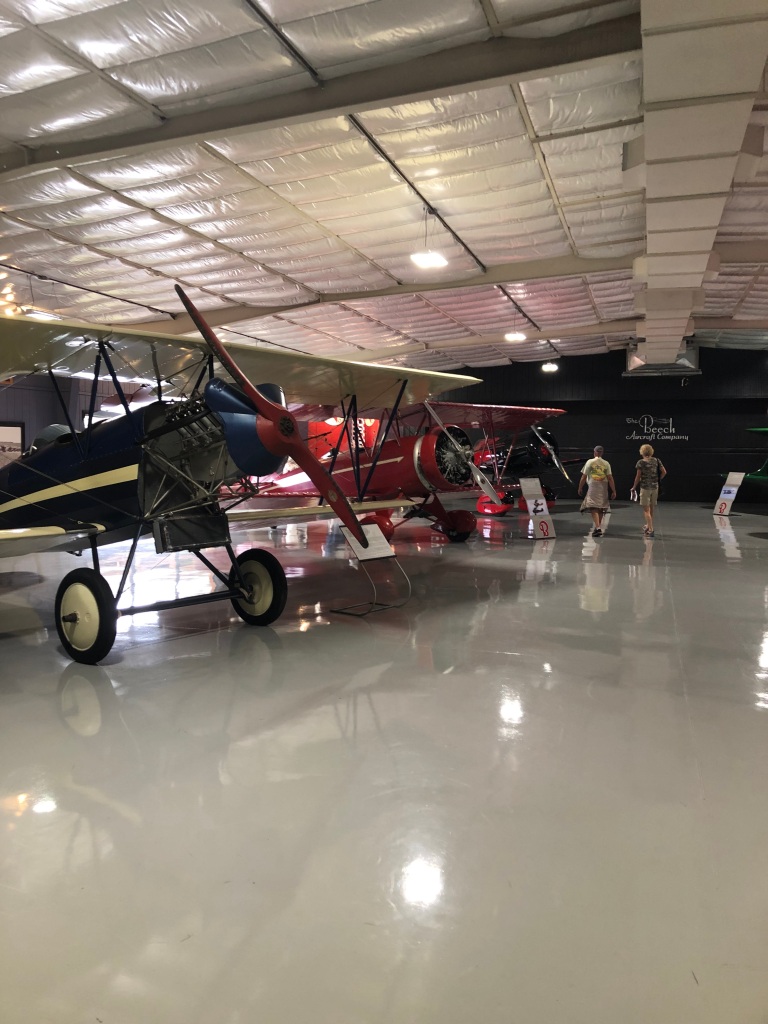
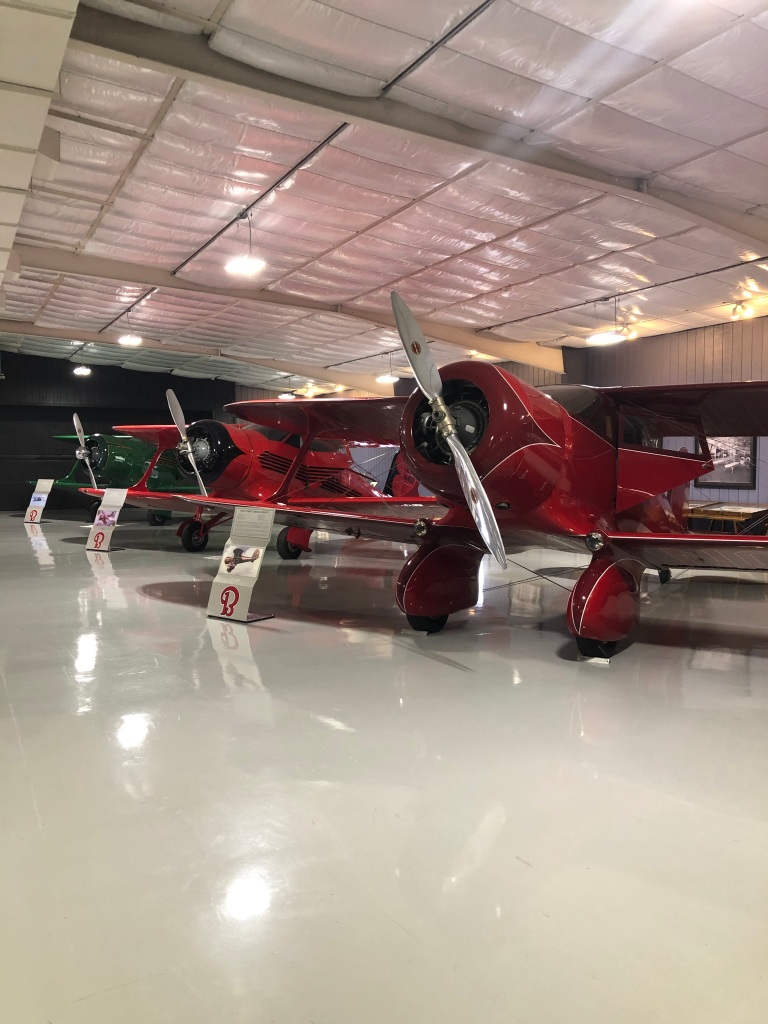
Below are some photos of a T-28, Stearman, Lockheed, a DC-3 and a P-51, all in like new or better condition.

IMG_0807 IMG_0809 IMG_0812 IMG_0813

IMG_0815 IMG_0821

IMG_0822

Posted in General aviation | Tagged | Leave a comment

CloudAhoy and IFR Procedures


The more I use CloudAhoy, a free IOS app for iPhones and iPads, the more impressed I am.

This app is a great tool for debriefing flights with your safety pilot or instrument instructor to show exactly how well you tracked an airway or executed the instrument and missed approaches.CloudAhoy in the cockpit

In the debrief mode, your actual route can be overlaid on Google Earth, a VFR Sectional, an IFR en-route or various published instrument procedures. It is amazingly accurate. The view can be tilted, or put onto 3-D mode, and viewed in north or track up. There is also a demo mode to replay the flight.

On a long cross country you can share your flight with friends or family with a simple email link.

I also use the app for log book purposes, which in my case is a customized excel spreadsheet. It tracks times for each segment of the flight, including airborne and taxi segments.

Here is how the flight segments look. In this case, we flew a total of 220nm in 2 hours and 4 minutes, including taxi times:

segments

To track a flight, simply start the app while on the run-up ramp. It runs in the background using the GPS chip in your iPhone or iPad. CloudAhoy automatically shuts itself off when you land, and sends the telemetry data to the CloudAhoy server once a wi-fi or xG internet connection is re-established.

Below is a series of instrument approaches I flew with a CFII, overlaid on a sectional. We started out from Leesburg, FL, LEE, heading northwest then flew the GPS/RNAV 5 at Williston, X60. After the approach, heading southeast we flew ILS 36 at Ocala, OCF, then full approach to the GPS/RNAV 13 back at Leesburg. On the miss, we continued southeast to the ILS 7 at Orlando, ORL, and finally back to the northwest into Leesburg.

IFR

Posted in General aviation | Tagged , , | Leave a comment

Air Tractor on Steroids


Taxiing out for todays flight we saw this beast parked on the ramp. This is a Fire Boss Amphib Air Tractor. She has a 1,600 SHP PT-6 turbine and amphib floats.

Sweet!

IMG_0802[1]

Posted in General aviation

Vintage Transport Aircraft: Re-purposing a DC-7


In 1956, a brand new Douglas Aircraft DC-7B was christened with US registration number N101LM. She was to begin service as a passenger airliner for American Airlines.

N381AAdc7b

Powered by four Wright Radial R-3350 Series engines, she carried a crew of 2 pilots, 1 flight engineer, 2-4 stewardesses and 102 passengers. She was one of 24 DC-7Bs ordered by American.

The Wright Radial Cyclone engine was designed in 1937. Each of her four engines consisted of 18 cylinders, arranged in banks of two, displaced 3,350 cubic inches, and churned out 3,250 horsepower. These supercharged engines were the most powerful piston aircraft engines ever built.

The DC-7 had a range of up to 5,000 miles at a maximum ceiling of 28,000 feet, depending on payload. It took her just under 8 hours for a non-stop US coast to coast flight, at a cruise speed of 360 mph.

The DC-7 airliner was the last of an era, preceded by the DC-3, DC-4 and DC-6 aircraft. As a child in the early 1960′s, I can vaguely recall flights on aircraft like the DC-7 and the Constellation. I remember being asked if I wanted to visit the cockpit and flight crew before take off. It was an era of fine linen table cloths, real china, edible food and well-dressed travelers. Certainly, it was well before the era of rude passengers, surly flight attendants and the TSA.

Starting in the late 1950′s, piston-engine commercial passenger aircraft was phased out due to the arriving jet age. Jet engines were quieter and more reliable. They burned inexpensive Jet-A fuel as opposed to Avgas. Jetliners flew higher, farther and faster than radial-powered piston aircraft. Just 107 DC-7Bs were built before the Douglas DC-8 and Boeing 707s jetliners began service in the late 1950′s.

After her passenger carrying days were over, N101LM was registered as N381AA and earned her living as an air freighter.

N381AA spent her last 6 years as a cargo hauler operating out of Opa Locka, FL, (KOPF) near Miami, operated by Turks Air.

Finally, in mid 2012, and after over 32,000 flight hours on the airframe, she was sold one last time. But she would not fly again. Her wings and vertical stabilizer were removed and she was loaded on a trailer and trucked 250 miles north, up  Interstate 95, to the New Smyrna Beach Airport, FL (KEVB). There, the wings were re-installed, commencing the process of being converted to a fine dining restaurant at the little GA field.

In November I met up with a few other Beechcraft Bonanza pilots from Central Florida at the New Smyrna Beach Airport. The morning was cool and crisp. We were there to enjoy a fund raising breakfast and tour of the conversion work of the aircraft, now known as The DC-7 Grille. After the renovation, the aircraft will be maintained as a static display restaurant and museum, as a tribute to the golden age of aviation.

Bonanzas at EVB

Bonanzas at EVB

Upon taxiing to the GA ramp, we found strong support for this ambitious project from the local and aviation community, where nearly 400 other people had turned out for a pancake breakfast and tour. There was a long line to board the aircraft and view the work to date.

Currently, the aircraft interior has been stripped and walls are being fabricated. The all-original instrument panel is being refurbished as it would have looked during the airplane’s heyday.

Once complete, she will seat 40 diners at any one time, plus the bar area.

IMG_0533 IMG_0534  IMG_0537 IMG_0538 IMG_0540 IMG_0541 IMG_0542 IMG_0549

When the restoration is complete, the aircraft will look like this. I hope they are successful, and prevent this beautiful piece of history from sitting in some Arizona bone yard, or being re-smelted into beer cans.

dc7-grille2

(from the DC-7 Grille website)

Posted in General aviation | Tagged , , ,

The NBAA Visits Orlando


In November, The National Business Aviation Association (NBAA) held its annual convention in Orlando, Florida.

I managed to sneak out of work early on a warm, Thursday afternoon and visited the NBAA flight-line at Orlando Executive Airport, KORL. There were so many brand new business jets parked on the ramp it was impossible to view them all.

IMG_0519

Walking through the enormous, on-site registration hangar my first impression was that the NBAA is not your father’s Sun-n-Fun aviation event. There were no used parts flea market, nor vendors in campers selling old tube-style avionics, nor homebuilt aircraft on display. Clearly, these patrons are not the type to turn wrenches on their own aircraft.

Dozens of exhibitors and major corporations spent big dollars entertaining folks contemplating spending anywhere from $5 million to $100 million for an aircraft. Conventioneers were well dressed, with men in suits and women in heels. Attractive young models handed out complimentary bottles of chilled water as you wandered among large static displays, or strolled through voluminous air conditioned tents, outfitted with plush furniture and thick pile carpeting.

The array of kero-burners was impressive. We toured the inside of Wayne Huizenga’s BBJ 737 to get some ideas on how to redecorate the Bonanza (no, not really). The BBJ was impressive with its lavish interior, large flat screen TVs and a tail-mounted forward-facing video camera giving passengers a flight deck-view of the world ahead. I understand the aircraft is for sale. If you purchase it, but are not a Miami Dolphins fan, you will need to remove the team’s logo from the vertical stabilizer.

One has to marvel at the enormous amount of wealth and discretionary income it takes to keep even a small private jet in the air.

 IMG_0506 IMG_0508 IMG_0509 IMG_0510 IMG_0516

We also got a chance to see the new mock-up of the new Lear 85 panel. It’s all business and very impressive.

IMG_0518

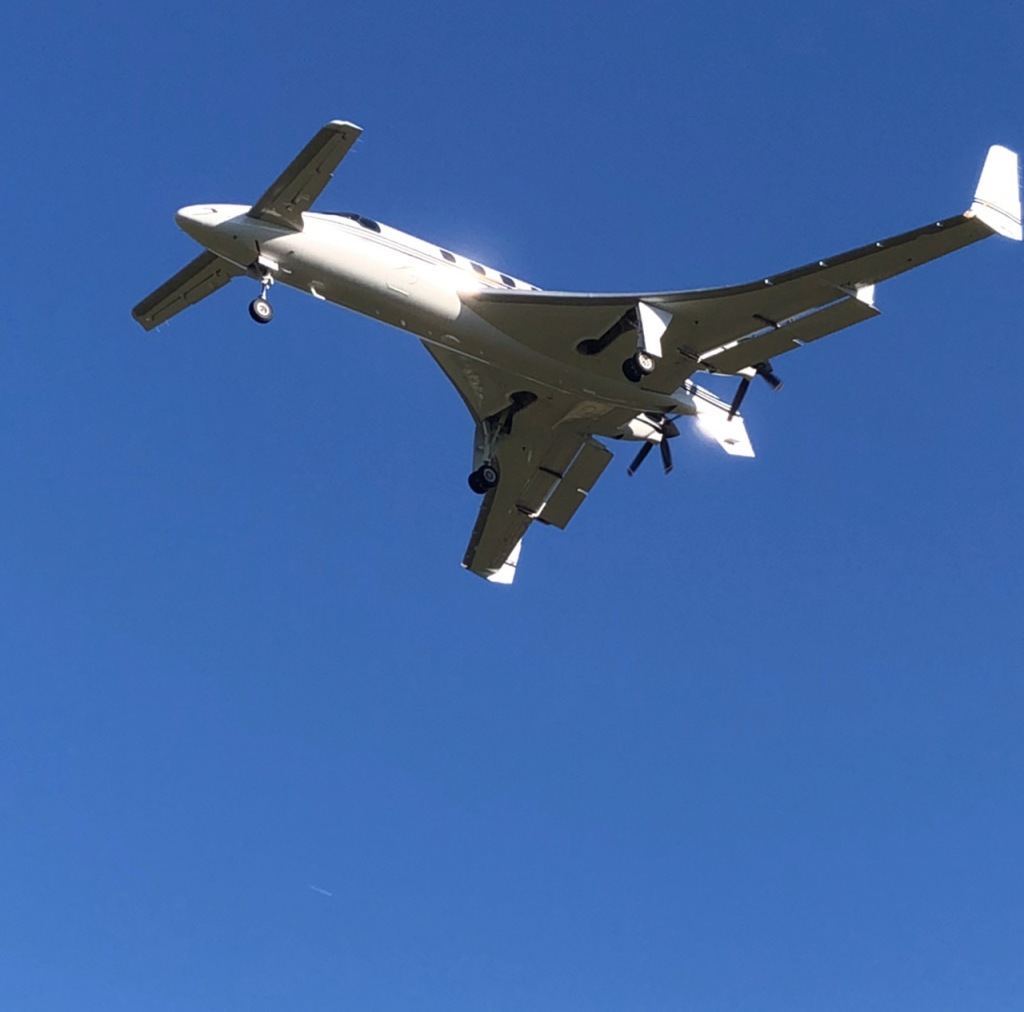
The HondaJet, with its wing-mounted engine pylons, attracted a lot of attention as well. The wing-mounted engine is a fairly radical design concept.

IMG_0527

Not surprisingly, there were no avgas-burning piston aircraft on the ramp, other than Beech. Also, very few turbo-props, considered the workhorse of the business aviation set, were evident. This was the NBAA, after all.

Beechcraft exhibited the new piston-engined G-36 Bonanza and G-58 Baron on the ramp. But with prices on the north and south sides of a million dollars, they still seemed tiny and insignificant, parked in the shadows of the heavy iron that surrounded them.

IMG_0522

One of my favorite vintage aircraft on display was a beautifully restored 1930’s-designed Beechcraft Model 17 Staggerwing. The sleek Staggerwing design represents the very genesis of business aviation, and was brought to market during the Great Depression. Designed in 1933, the biplane cost a staggering (no pun) $14,000 to $17,000, during a time when 25% of the workforce was unemployed. Only 785 were ever built, and production ended in 1949.

IMG_0524 IMG_0525

All of this reminds me of the old quip that “if God wanted man to fly, he would have given him more money”.

Posted in General aviation | Tagged , , ,

Summer Weather Flying in Florida


In one of my earlier posts, I wrote about dealing with convective weather during the summer months, or alternatively, pickling your plane. If you are going to own a aircraft and use it for its maximum utility, or even have a fair chance of staying current, it’s not a practical decision.

Flying in the Southeast during the rainy months simply means doing a little more flight planning, leaving earlier in the day before the convection builds, and having one or more “outs” if the weather does not go as planned. Sometimes it means you cancel your flight altogether, and take the bus. You must become a student of the weather because taking a cursory approach won’t cut it.

On a recent late summer flight from Ft. Lauderdale Exec. to Orlando, there was active weather along my route. The weather at both the departure and destination was relatively clear. My departure time out of Lauderdale Exec was 1700 local, and the peninsula was covered with typical afternoon pop-up rain showers and thunderstorms.

After studying the charts and live radar in the flight planning room at KFLL, I decided to depart and take a look. My first “out” was that it appeared that Ft. Lauderdale would stay clear of any rain. If things started looking ugly, I could simply return to my departure point.

As I neared West Palm Beach, here is what the airborne NEXRAD weather display looked like. There was a cluster of cells west of PBI and two more along my planned route from PBI to ORL. The cells showed signs they were merging, effectively closing the gap and blocking a northwest run over Lake Okeechobee. The Stormscope showed activity to my west and northwest, but was clear to the north.

(right click for larger images)

Once north of the PBI VOR, instead of joining Victor 537 as planned, I requested a reroute from Miami Center to fly north along Victor 3, paralleling the east coast of Florida. This route would avoid the weather north and west of the TBIRD intersection. The weather was moving slowly eastward, but I calculated my ground speed would be fast enough to squeeze by before the nasty stuff reached the shoreline.

Since the frequency was relatively quiet, Center quickly approved my request for direct Melbourne (MLB). The only other traffic I heard being worked by ATC was a Mooney near Pahokee/Lake Okeechobee area (PHK), looking for some VFR weather.

This was my second opportunity to evaluate a continue/retreat decision. If the cells moved faster than thought, rather than be pushed offshore to avoid them, I would land at the closed airport and wait it out.

As I trekked northward near Ft. Pierce, I was in light rain, but still in good visual conditions. I had lots of alternatives behind me in case the weather looked uglier than forecast:

Here is how things looked off the left side as I passed east of the weather north of Ft. Pierce. The view out the front windscreen was still clear of any precip and lightening. Yes, that’s cloud to cloud lightening.

Once I reached the Melbourne area, the worst of the weather was behind me. I turned northwest towards Orlando, avoiding the remaining scattered buildups and showers.

While NEXRAD and Stormscope are vital tools, I don’t like IMC in and around convective weather. The final decision for me to continue the flight, or not, is based on what I see out the front windscreen. If I can’t see anything, I’m likely going to land and let the convection pass.

Posted in General aviation | Tagged , , , ,

Flying over the Smoky Mountains


On a recent round-trip to Lexington, KY (KLEX), from Florida, our route took us east of Atlanta and over the The Great Smoky Mountains.

The Great Smoky Mountains are beautiful, and their area covers western North Carolina and Tennessee as part of the Appalachian Mountains. The mountains are filled with scenic, winding roads, wildlife and a multitude of streams and rivers.

The 3 1/2 hour flight in my A36 northbound at 9,000 feet was uneventful, with ceiling and visibility unlimited. The air was crisp and cool as you would expect for early Fall. Northbound, we passed over Clingmans Dome, the highest point in the Smokeys at 6,643′ MSL on our way towards the Volunteer VOR, (Knoxville). I have hiked Clingmans Dome many times, dating back to my childhood. The perspective from the air is completely different.

The next few days were spent with family members and driving the old limestone rock lined back roads in horse farm country. We visited Old Friends farm for retired thoroughbreds, poked our noses in some old antique shops, made a stop at Shaker Village and visited the family cemetery.

On the day of our planned departure for the return flight home, the weather forecast over the mountains was marginal at best. There was a wet, cold low pressure area over the Smokeys, with widespread Airmets for icing from 5,000 to FL 230, and Sigmets for thunderstorms. The front stretched from the Virginias to the Gulf Coast, effectively blocking our route home.

In a piston single without known-ice, it was an easy decision to cancel the flight home, and cancel we did.

Normally, icing conditions above 5,000 MSL would simply mean in a single engine aircraft that you stayed low, in above-freezing temps, to avoid the ice. With the mountains rising to 5,000 feet, that would not be an option. The MEAs were in the 7,000 foot range over the mountains. Later that day the system dumped a foot of snow on Snowshoe, WV, so canceling the flight was the right call.

The next day we awoke to sunny skies and cool temps, as the low pressure area moved eastward towards the coast of North Carolina. After getting our IFR clearance from ATC, we departed KLEX behind a Pilatus, a much more capable, deiced, single engine turbo-prop.

The Pilatus was bound for Naples, FL along a similar route as ours. I felt better about canceling our flight the previous day once I found out the pilot of the Pilatus had scrubbed his flight as well.

On our flight home, south of London, KY (KLOZ),  at 10,000 feet, we flew over an area of undercast and never saw the ground again until our GPS approach at our home airport. The view out the windows at altitude was like looking over an icy, featureless tundra for as far as the eye could see.

A quick check of the en-route weather on the Avidyne indicated the ceilings along our route stayed stubbornly low, with airports reporting 200-400 overcast and 1-2 miles visibility. Cloud tops were running 6,000 feet.

As we cruised along in the bright sunshine, the weather below us was solid, low IFR for hundreds of miles in all directions. In the back of my mind were those two new Continental cylinders I replaced at my last annual, and telling myself not to worry about the bathtub curve and infant mortality rates of recently installed engine parts.

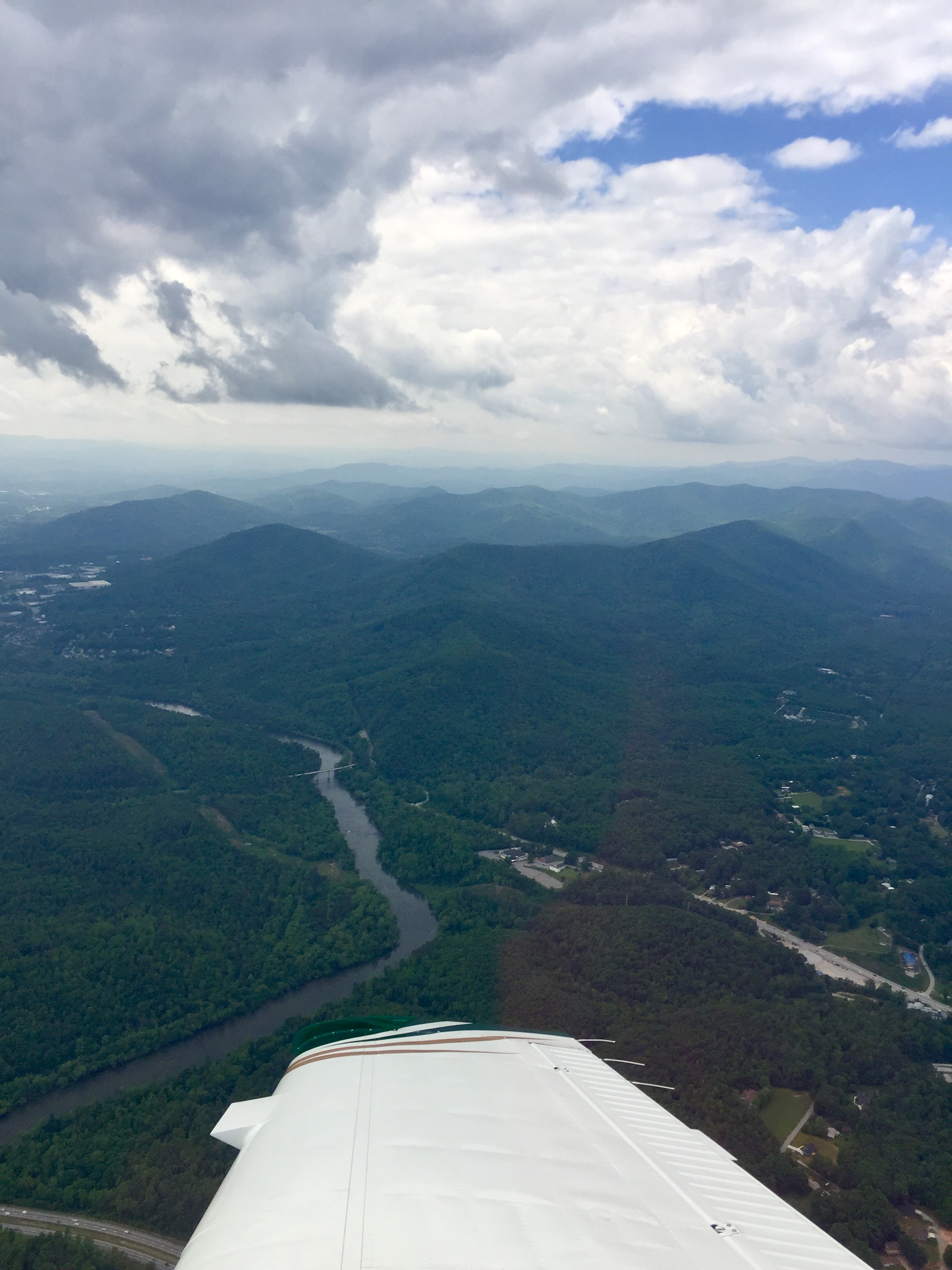
Here are a few shots of our flight over the mountains in the same area. The northbound flight was clear, and the southbound flight had a solid deck beneath us:

(right click to enlarge any photo in a new window)

Posted in General aviation | Tagged , , , | 1 Comment

Jekyll Island Shrimp and Grits Festival – Airport Closed!


After a hectic week, we had planned to fly to Jekyll Island (09J) this weekend and hang out at the Shrimp and Grits Festival. http://www.shrimpandgritsfestival.com/

Jekyll Island is a small island off the southeast coast of Georgia, and is just a 45 minute flight from our home base. There is a 3,000 ft strip on the west side of the island that I have landed at many times, and it’s very convenient to the entire island.

As I am doing some flight planning on DUATS I came across this:

Jekyll Island GA [09J]: September NOTAM #176 issued by Macon GA [MCN]
Aerodrome closed effective from September 14th, 2012 at 12:00 PM EDT (1209141600) – September 17th, 2012 at 08:00 AM EDT (1209171200)

Really? They closed the airport? I called the Jekyll Island Chamber of Commerce and Business Development and was indeed told that the airfield was shut down for the entire weekend to accommodate overflow automobile parking. She mentioned that we were welcome to fly into St. Simon’s Island (SSI) to the north, and take a 45 minute cab ride to the festival.

We have flown into many events before, including the Cedar Key Seafood Festival, Marathon, Florida Seafood Festival and the Amelia Island Concourse d’Elegance. I don’t think I can remember a single instance where the locals closed an entire airport for parking.

Legally I’m not sure how they can close the airport. Jekyll Island has accpeted FAA grant money in the past and must keep the airport open “in a safe and serviceable condition” until at least 2022. The authority has accepted more than $895,000 in federal grant money.

Great move Jekyll business leaders. I let the lady at the Chamber of Commerce office know that it really does not make much sense to promote a festival, and then make it difficult for a segment of people with discretionary income from attending your event.


Posted in General aviation | Tagged , , , ,

ForeFlight Mobile and Runway Incursions


Runway incursions while taxiing are apparently still a big problem with all pilots, from student to ATPs. The FAA has attempted to reduce runway incursions with new phraseology over the past year, introducing terms such as “line up and wait”, the ICAO term for “position and hold” when clearing an aircraft onto a runway for departure.

The FAA also requires that controllers issue a specific crossing clearance at each runway, even if the runway being crossed is not active at the time. ATC is no longer permitted to clear us to a runway in a single clearance if that taxi clearance requires crossing one or more runways along the route. The clearance must be broken down into separate  transmisions between Ground Control and the pilot. Unless the pilot is specifically cleared across a runway, he or she is expected to hold short of that runway, or risk an incursion.

A few days ago I had a chance to fly the Bonanza with ForeFlight Mobile HD on my iPad with its latest update; version 4.7 with the Runway Proximity Advisor.

While you are taxiing, this ForeFlight update utilizes the GPS, either internal to the iPad, or an external GPS unit, to position your aircraft in relation to known runway intersections at airports around the country.

With this upgrade, ForeFlight users will get an automatic on screen pop-up and aural warning whenever they are approaching a runway, giving the pilot an additional heads-up when taxiing at unfamiliar airports, helping to prevent runway incursions.

On my iPad and iPhone I could easily hear the aural warnings over the engine noise, wearing Bose X noise canceling headsets. The bluetooth feature of ForeFlight mobile can also channel these aural warnings directly to bluetooth enabled headsets.

Below you can follow my progress using the little blue icon as I taxi from the GA ramp at Leesburg, FL (KLEE) to RW 03 for departure.

In the first screen grab, I am southeast bound on taxiway Alpha, approaching RWY 03-21, where I have been instructed to hold short for landing traffic on 03:

In this screen below you can see that I have been cleared across RWY 3-21 and made a right turn on taxiway Kilo. The pop up and aural warning tells me that I am approaching RWY 13-31.  I hold here for ATC clearance across 13-31:

In this next screen, I have been cleared southwest onto taxiway Kilo, across 13-31 and continue towards RWY 03. ForeFlight has advised me I have entered RWY 13-31: 

In this last screen, I have been cleared onto the RWY 03 for departure and ForeFlight has advised me I have entered an active runway:

Runway Proximity Advisor is not idiot proof. Just as a few pilots have landed retract aircraft gear-up while ignoring a gear warning horn, this latest ForeFlight feature will not prevent an incursion if your head is elsewhere. While you can think of this feature as a way to increase your situational awareness, if you are not paying attention you will still have an incursion.

Where I find this feature useful is at unfamiliar airports, especially larger ones where all you see at night is a sea of blue taxi lights. Between the geo-referencing feature and the Runway Proximity Adviser, you should be able to avoid the dreaded “Call the tower, possible pilot deviation” radio call.

Posted in foreflight, General aviation | Tagged , , , , | 1 Comment